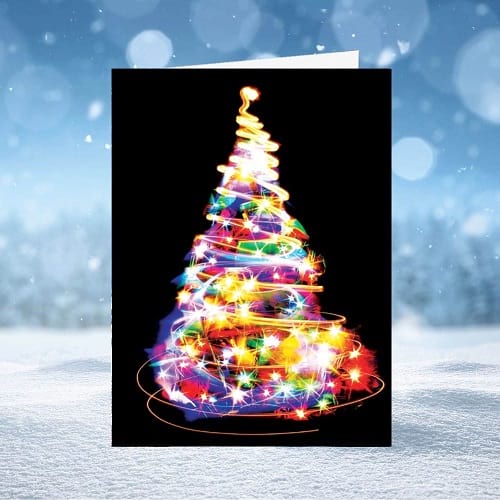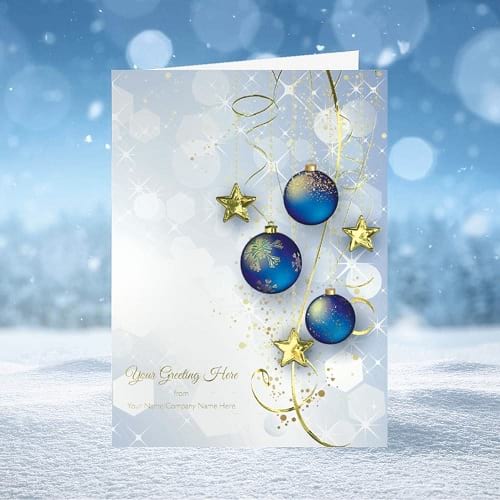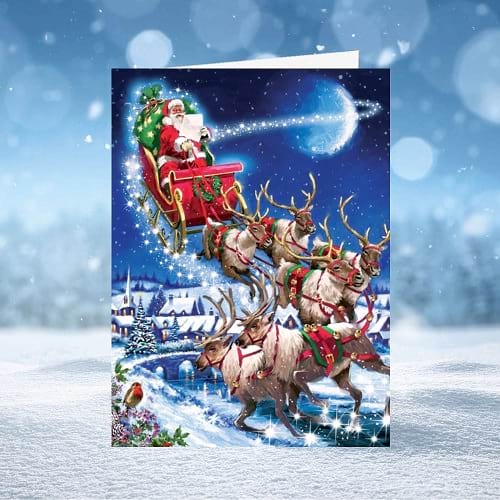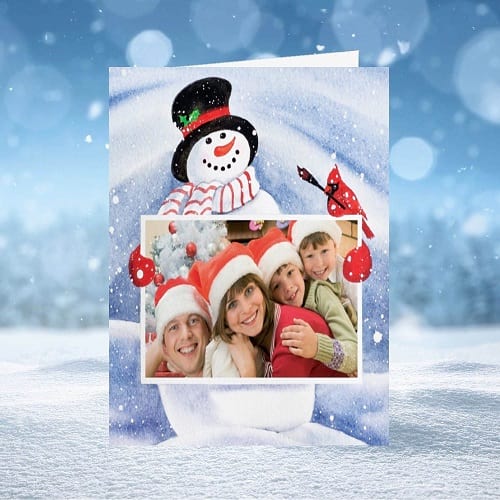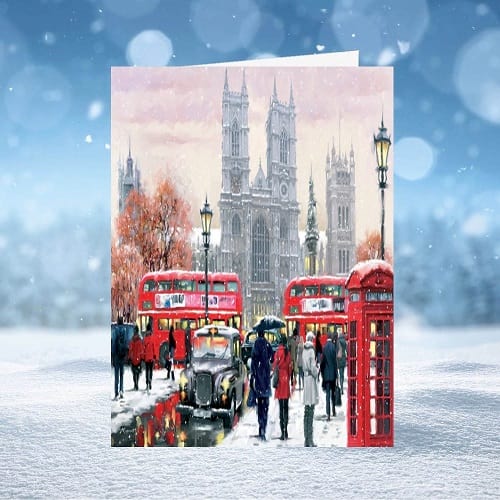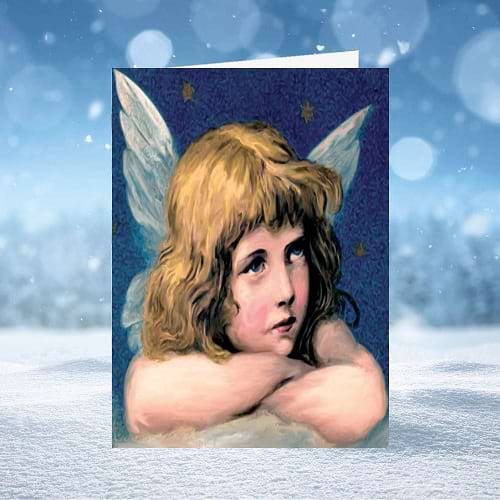
Personalised Cards
Fun cards go
Traditional go
Photographicgo
  Personalised
Cards from
50p  
Your name on the front
Enter Your Name
View Range
Personalised
Mugs


History of Christmas
History of Christmas trees
History of the Christmas Card
The Origins of Christmas Presents
History of the Calendar
Featured Designs
Personalised Christmas Cards
Corporate Christmas Cards
Design Christmas Cards
Charity Options

Christmas Connections offers a generous selection of personalised Christmas cards

Christmas Connections has a generous assortment of personalised Christmas cards available for browsing, customising and purchasing. Our cards are perfect for Christmas. Whether you're looking for personalised Christmas cards to celebrate the joy of the season with for family, friends or colleagues, you'll find your perfect match here with us.

making personalised Christmas cards is easy!

To get started with our collection of personalised Christmas cards, select the "Our Designs" link from our homepage. Next, you'll be presented with several categories: traditional greetings, corporate Christmas cards, cards that give you the option to add your own photos, and of course, our best sellers, which are always a hit with our customers and their friends and loved ones.

How to choose your own personalised Christmas cards

Each category will present full pages of available personalised Christmas cards. You can click on the thumbnail images to see a larger view of the card, as well as any pertinent details, such as card finishing and accents, and the dimensions of the card itself. You'll also be shown the available purchase options, which include how many cards you'll receive for a set price.

Once you have found a Christmas card design that you like, click "Add to shopping cart". Now you'll have the opportunity to customise your personalised Christmas cards! The first option you're presented with is the ink color. The default ink color is black. For an additional charge, you may have your choice of red, green, blue, red or burgundy ink instead. A fancier option that is for additional cost would be to choose red, gold or silver foiling. When you have made your selection, click the "Next" link located on the righthand side of the page.


Now you'll be presented with several choices for your holiday greeting. Again, make your desired selection, and then click "Next".

Typeface refers to the font that will be used for the text on your personalised Christmas cards. There are a variety of fonts available, with each being shown in a high quality sample image. Certain fonts look better with certain types of personalised Christmas card.

If you would like to have your chosen charity mentioned on your personalised Christmas cards, select it and then tick the "Print Charity Accreditation" box. If you would rather not have this information included on your greeting cards, leave the box unticked.

Add your own designs to personalised Christmas cards

Artwork is an optional feature for our personalised Christmas cards. For an additional charge, you may include a photo or image of your choice. However, be aware that the image will be reduced to a single color. If you need to include an image with its original colors intact, please call the number listed on the page.

Finally, you may personalise the text that will be printed on your personalised Christmas cards. The default selection that you chose in step two of the personalisation process will be shown here. You are free to change the text to say anything you want it to say. You may also have your name and company name printed, along with your address.

Completing your personalised Christmas cards order

The final step is to preview your personalised Christmas cards. Make any changes needed by clicking the back button, then view the PDF proof to submit your order to your shopping cart. Finally, follow the checkout instruction.

Our Corporate Christmas Cards selection

We keep businesses in mind when stocking our selection of Christmas cards. While our personalised Christmas cards are an excellent option for anyone who is looking to spread some Christmas cheer with family and friends, it is understandable that companies want to do the same, without being as personal and intimate with their messages. Our line up of corporate Christmas cards provide you with the greetings you'll need at the workplace this holiday season.

Why choose Corporate Christmas Cards?

Most Christmas cards are designed with sending messages to close friends and loved ones in mind. For many reasons, these types of Christmas greetings may not be appropriate for employees and colleagues. Furthermore, with most companies being as diverse as they are, not everyone will be celebrating Christmas, and many company executives or owners may wish to choose more neutral greetings to send out to everyone. Our collection of corporate Christmas cards includes those cards that touch directly on Christmas, as well as cards that refer to the holiday season in a general way. As always, each of our corporate Christmas cards and their greetings can be customised so that they fit your exact needs.

Designing your Corporate Christmas Cards

Designing your choice of corporate Christmas cards is very easy. Browse


through the corporate Christmas cards category and click on thumbnails to view larger images. When you have found a card that suits you, click "Add to cart". Now you'll be taken through the design process. Here, you can choose exactly how your corporate Christmas cards will look. Select ink colour, whether or not you would like your charity accreditation to appear on your cards, add optional images and artwork, enter your company name, and then click to Preview Your Card. View the PDF proof to see a high quality sample of the finished product. When you're ready to submit your order, hit Next, and then follow the order and checkout procedure.

How to word your Corporate Christmas Cards

When wording corporate Christmas cards, it's best to keep messages short and sweet. A simple "Merry Christmas and Happy New Year" or "Season's Greetings" will suffice nicely. Don't forget to include your company name.

Tips for Corporate Christmas Cards

Choose corporate Christmas cards that are best suited for those you are sending them to. If you are sure that everyone celebrates Christmas, then choose Christmas themed corporate Christmas cards. If you're not sure, choose neutral greeting cards that reflect on the winter and holiday season.

How to design Personalised Christmas Cards

Many people often turn to plain, store bought Christmas cards because there's no effort required, aside from signing your name and mailing the card. Many people think that they can't obtain personalised Christmas cards without a lot of materials, a lot of work and a lot of money. But as Christmas Connections can surely show you, this is simply not the case. With the right design templates, a series of personalisation options and colours, you can have beautiful Christmas greetings to share with those closest to you.

How the right design can make the best Christmas card

When picking out and designing your Christmas cards, you should first consider the type of message you want to send. If you are religious and wish to share not only the spirit of the season but the true meaning behind it with everyone on your Christmas card list, then you should select a Christmas card design that has a reference to the religious aspects. You can also customise your greeting, either by choosing one of the greetings we have to offer, or making your own greeting during the design process.

Picking and choosing colors

Traditional Christmas colours are red and green, with the red being a little bright and the green being darker and more subdued. But there's no need


to stick strictly with red and green! As you have probably seen from our extensive gallery of personalised Christmas cards, we incorporate many different colors into our designs, including yellow, gold, silver, purple and blue. There's no reason why you can't use all of these colours and still show off your Christmas spirit. The trick is to use designs that reflect the Christmas season, and to pick colours that are deep and work well together. Don't shy away from purple and blue because they seem too dark. Instead, use those colours and add highlights of silver and gold in your foil and ink options to brighten things up!

Selecting the right typeface

Typeface is where a lot of people get stuck in the process of designing Christmas cards. While their eyes may be naturally drawn to one type of font, they may also understand and accept that the font they have their eyes on may not be the best one for their style of Christmas card. Try to pick a font that follows the mood of your card.

Design Christmas cards with kids in mind

Children often make up a portion of our personalised Christmas card recipient list, even if we do not realise it. While we send cards to families, those families almost always have children of varying ages. Try to include them in the Christmas spirit by selecting cards with whimsical and child-friendly designs.

About our charity Christmas cards

Christmas is the season of giving. Christmas is when we take the time to reflect on our relationships with family and friends, and renew them through the spirit of the season. But while we're focused on selecting the perfect present for our spouses, our children, our parents and other relatives, and our closest friends, there are many others in the world who are not as fortunate. We support many charities with our Charity Christmas cards, including the British Heart Foundation, Save the Children, Willow, Noah's Ark Appeal, Great Ormond Street, and new for 2009, the Breast Cancer Care. We have a full listing of the charities we support and encourage you to donate to available on our website. With eleven total charities to choose from, there is surely one that you can make a donation to when you order Charity Christmas cards from us.

Things to know about our charity Christmas cards

Our charity Christmas cards are no different than any of our other Christmas cards. This is because all of the Christmas cards in our vast collection have the potential to become charity Christmas cards. Even the business Christmas cards that companies use can be charity Christmas cards. It is as simple as choosing a charity to donate to during the individual Christmas card's customisation process, and then electing to have that charity and your willingness to contribute to it mentioned it. Why would you want to tell others about your charity Christmas cards? In addition to being proud of the fact that you're helping those less fortunate than yourself, your willingness to step up and donate to a good cause may encourage and influence others to do the same.


How to design your charity Christmas cards

How you personalise your charity Christmas cards is up to you. All of the cards are ready for you to tweak to perfection. You'll have the option to specify the ink colours (used for the text on your cards), whether or not to include your charity accreditation, upload your own personal photo or original artwork for inclusion, and specify and/or make your own personalised greeting.

Picking the right charity Christmas cards

One big deciding factor in the type of charity Christmas cards you should select is who the cards are going to. For family and friends, our galleries of traditional Christmas greetings and quirky and contemporary greetings may be right for you. If you are a business, then take a look at our corporate Christmas card collection: we have a great selection of company Christmas cards available.

What our charity Christmas cards include

All of our charity Christmas cards include everything you will need to send holiday greetings to friends and loved ones. From our personal Christmas cards to our business Christmas cards, each one is designed to its fullest potential, with high quality images, vivid inks, beautiful foil accents, glossy and matte finishes.

In the Western world, the birthday of Jesus Christ has been celebrated on December 25th since AD 354, replacing an earlier date of January 6th. The Christians had by then appropriated many pagan festivals and traditions of the season, that were practiced in many parts of the Middle East and Europe, as a means of stamping them out.

There were mid-winter festivals in ancient Babylon and Egypt, and Germanic fertility festivals also took place at this time. The birth of the ancient sun-god Attis in Phrygia was celebrated on December 25th, as was the birth of the Persian sun-god, Mithras. The Romans celebrated Saturnalia, a festival dedicated to Saturn, the god of peace and plenty, that ran from the 17th to 24th of December. Public gathering places were decorated with flowers, gifts and candles were exchanged and the population, slaves and masters alike, celebrated the occasion with great enthusiasm.

In Scandinavia, a period of festivities known as Yule contributed another impetus to celebration, as opposed to spirituality. As Winter ended the growing season, the opportunity of enjoying the Summer's bounty encouraged much feasting and merriment.

The Celtic culture of the British Isles revered all green plants, but particularly mistletoe and holly. These were important symbols of fertility and were used for decorating their homes and altars.

New Christmas customs appeared in the Middle Ages. The most prominent contribution was the carol, which by the 14th century had become associated with the religious observance of the birth of Christ.

In Italy, a tradition developed for re-enacting the birth of Christ and the construction of scenes of the nativity. This is said to have been introduced by Saint Francis as part of his efforts to bring spiritual knowledge to the laity.

Saints Days have also contributed to our Christmas celebrations. A prominent figure in today's Christmas is Saint Nicholas who for centuries has been honored on December 6th. He was one of the forerunners of Santa Claus.

Another popular ritual was the burning of the Yule Log, which is strongly embedded in the pagan worship of vegetation and fire, as well as being associated with magical and spiritual powers.

Celebrating Christmas has been controversial since its inception. Since numerous festivities found their roots in pagan practices, they were greatly frowned upon by conservatives within the Church. The feasting, gift-giving and frequent excesses presented a drastic contrast with the simplicity of the Nativity, and many people throughout the centuries and into the present, condemn such practices as being contrary to the true spirit of Christmas.

The earliest English reference to December 25th as Christmas Day did not come until 1043.

Germany is credited with starting the Christmas tree tradition in the 16th century when devout Christians brought decorated trees into their homes. Some built Christmas pyramids of wood and decorated them with evergreens and candles if wood was scarce.
The Christmas tree custom gradually became popular in other parts of Europe. In England Prince Albert, husband of Queen Victoria made Christmas trees fashionable by decorating the first English Christmas tree at Windsor castle with candles and a variety of sweets, fruits and gingerbread in 1841. Of course, soon other wealthy English families followed suit, using all kinds of extravagant items as decorations. Charles Dickens described such a tree as being covered with dolls, miniature furniture, tiny musical instruments, costume jewelry, toy guns and swords, fruit and candy, in the 1850s.

Most of the 19th century Americans found Christmas trees an oddity. The first record of one being on display was in the 1830s by the German settlers of Pennsylvania. They put one on show to raise money for a local church. In 1851 a tree was set up outside of a church. The people of the parish thought it such an outrage and a return to paganism and asked the minister to take it down.
By the 1890s Christmas ornaments were arriving from Germany and Christmas tree popularity was on the rise around the U.S. It was noted that Europeans used small trees about four feet in height, while Americans liked their Christmas to reach from floor to ceiling.

The early 20th century saw Americans decorating their trees mainly with homemade ornaments, while the German-American sect continued to use apples, nuts, and marzipan cookies. Popcorn joined in after being dyed bright colors and interlaced with berries and nuts.

Electricity helped introduce Christmas lights making it possible for Christmas trees to glow for days on end. With this, Christmas trees began to appear in town squares across the country. All important buildings, private and public, signaled the beginning of the Christmas holiday with the tree ceremony. Early Christmas trees had, in place of angels, figures of fairies - the good spirits, though horns and bells were once used to frighten off evil spirits. In Poland, Christmas trees used to be decked with angels, peacocks and other birds as well as many, many stars. In Sweden, trees are decorated with brightly painted wooden ornaments and straw figures of animals and children. In Denmark, tiny Danish flags along with mobiles of bells stars, snowflakes and hearts are hung on Christmas trees. Japanese Christians prefer tiny fans and paper lanterns. Lithuanians cover their trees with straw bird cages, stars, and geometric shapes. The straw sends a wish for good crops in the coming year. Czechoslovakian trees display ornaments made from painted egg shells.

A Ukrainian Christmas tree has a spider and web for good luck. Legend has it that a poor woman with nothing to put on her children's tree woke on Christmas morning to find the branches covered with spider webs turned to silver by the rising sun.

Legends of the Christmas Tree :

Many legends exist about the origin of the Christmas tree. One is the story of Saint Boniface, an English monk who organized the Christian Church in France and Germany. One day, as he traveled about, he came upon a group of pagans gathered around a great oak tree about to sacrifice a child to the god Thor. To stop the sacrifice and save the child's life Boniface felled the tree with one mighty blow of his fist. In its place grew a small fir tree. The saint told the pagan worshipers that the tiny fir was the Tree of Life and stood the eternal life of Christ.

Another legend holds that Martin Luther, a founder of the Protestant faith, was walking through the forest one Christmas Eve. As he walked he was awed by the beauty of millions of stars glimmering through the branches of the evergreen trees. So taken was he by this beautiful sight that he cut a small tree and took it home to his family. To recreate that same starlight beauty he saw in the wood, he placed candles on all its branches.

Yet another legend tells of a poor woodsman who long ago met a lost and hungry child on Christmas Eve. Though very poor himself, the woodsman gave the child food and shelter for the night. The woodsman woke the next morning to find a beautiful glittering tree outside his door. The hungry child was really the Christ Child in disguise. He created the tree to reward the good man for his charity.
Others feel the origin of the Christmas tree may be the "Paradise Play." In medieval times most people could not read and plays were used to teach the lessons of the bible all over Europe. The Paradise Play, which showed the creation of man and the fall of Adam and Eve from the Garden of Eden was performed every year on December 24th. The play was performed in winter creating a slight problem. An apple tree was needed but apple trees do not bare fruit in winter so a substitution was made. Evergreens were hung with apples and used instead.

Another story comes from Germany about spiders and Christmas trees. Long ago families allowed their animals to come inside and view the Christmas trees on Christmas Eve. Because the Christ Child was born in a stable, they felt that the animals should take part in the Christmas celebration. But spiders weren't allowed because housewives didn't want cobwebs all over everything. of course the spiders were unhappy about this, so one year they complained to the Christ Child. He felt sorry for them and decided that late at night He would let them in to see the trees. The excited spiders loved the Christmas trees and all night long they crawled about in the branches, leaving them covered with webs. On Christmas morning the housewives saw what the spiders had done. But instead of being angry, they were delighted. For in the night the Christ Child had turned all of the cobwebs into sparkling tinsel. And even today, tinsel is often used to decorate Christmas trees to add that same sparkle the Christ Child gave the cobwebs long ago, in Germany.

Christmas cards originated in England over 150 years ago. "You cannot reach perfection though you try however hard to there's always one more friend or so you should have sent a card to," wrote Richard Armour. Sir Henry Cole knew exactly what Armour was saying. The founder of the Victoria and Albert Museum in London had so many Christmas greetings to send that handwriting them was impossible. Yet he wanted to make his friends aware of the need to help the destitute on that holiday.

The answer. In the year 1843, Sir Henry commissioned John Calcott Horsley to paint a card showing the feeding and clothing of the poor. A center panel displayed a happy family embracing one another, sipping wine and enjoying the festivities. (So much for good intentions. The card drew criticism because showing a child enjoying a sip of wine was considered "fostering the moral corruption of children.") "A Merry Christmas and a Happy New Year to You" was printed on that first card. Legend says Sir Henry didn't send any cards the following year, but the custom became popular anyway.

One of the earliest known customs of giving presents around the time of the winter solstice was during the Roman festival of the Kalends, which occurred on the first day of January. Such gifts were known as strenae.

High ranking officials of the Roman Administration were expected to present gifts to their Emperor during the Kalends. In fact, Caligula went to the extent of declaring an edict which obliged them to do so. He would stand impatiently at the front door of his palace waiting for them to arrive.

Originally, these gifts had taken the form of branches of evergreen taken from the grove of the goddess Strenia; but Caligula was not very keen on olive branches. So, the Roman dignitaries began to give gifts of honey and cakes as symbols of their wish that the new year might be full of sweetness, and gold that it might bring prosperity. That made Caligula much happier, as he was very keen on prosperity, especially his own.

The words 'Kriss Kringle' mean Christ-child and is the basis of a medieval legend, that the infant Jesus himself gave presents. This helped to establish Christmas Day as an occasion for Christians to give gifts. In those days presents were very modest and included such things as cakes, fruit, nuts, dolls and items of clothing.

The purpose of the calendar is to reckon past or future time, to show how many days until a certain event takes place the harvest or a religious festival or how long since something important happened. The earliest calendars must have been strongly influenced by the geographical location of the people who made them. In colder countries, the concept of the year was determined by the seasons, specifically by the end of winter. But in warmer countries, where the seasons are less pronounced, the Moon became the basic unit for time reckoning; an old Jewish book says that "the Moon was created for the counting of the days."

Most of the oldest calendars were lunar calendars, based on the time interval from one new moon to the next a so-called lunation. But even in a warm climate there are annual events that pay no attention to the phases of the Moon. In some areas it was a rainy season; in Egypt it was the annual flooding of the Nile River. The calendar had to account for these yearly events as well.

The Egyptian Calendar

The ancient Egyptians used a calendar with 12 months of 30 days each, for a total of 360 days per year. About 4000 B.C. they added five extra days at the end of every year to bring it more into line with the solar year.1 These five days became a festival because it was thought to be unlucky to work during that time.

The Egyptians had calculated that the solar year was actually closer to 3651/4 days, but instead of having a single leap day every four years to account for the fractional day (the way we do now), they let the one-quarter day accumulate. After 1,460 solar years, or four periods of 365 years, 1,461 Egyptian years had passed. This means that as the years passed, the Egyptian months fell out of sync with the seasons, so that the summer months eventually fell during winter. Only once every 1,460 years did their calendar year coincide precisely with the solar year.

In addition to the civic calendar, the Egyptians also had a religious calendar that was based on the 291/2-day lunar cycle and was more closely linked with agricultural cycles and the movements of the stars.
1. The correct figures are lunation: 29 d, 12 h, 44 min, 2.8 sec (29.530585 d); solar year: 365 d, 5 h, 48 min, 46 sec (365.242216 d); 12 lunations: 354 d, 8 h, 48 min, 34 sec (354.3671 d).

Lunar Calendars

During antiquity the lunar calendar that best approximated a solar-year calendar was based on a 19-year period, with 7 of these 19 years having 13 months. In all, the period contained 235 months. Still using the lunation value of 291/2 days, this made a total of 6,9321/2 days, while 19 solar years added up to 6,939.7 days, a difference of just one week per period and about five weeks per century.

Even the 19-year period required adjustment, but it became the basis of the calendars of the ancient Chinese, Babylonians, Greeks, and Jews. This same calendar was also used by the Arabs, but Muhammad later forbade shifting from 12 months to 13 months, so that the Islamic calendar now has a lunar year of about 354 days. As a result, the months of the Islamic calendar, as well as the Islamic religious festivals, migrate through all the seasons of the year.

The Roman Calendar

When Rome emerged as a world power, the difficulties of making a calendar were well known, but the Romans complicated their lives because of their superstition that even numbers were unlucky. Hence their months were 29 or 31 days long, with the exception of February, which had 28 days. However, four months of 31 days, seven months of 29 days, and one month of 28 days added up to only 355 days. Therefore the Romans invented an extra month called Mercedonius of 22 or 23 days. It was added every second year.

Even with Mercedonius, the Roman calendar eventually became so far off that Julius Caesar, advised by the astronomer Sosigenes, ordered a sweeping reform. 46 B.C. was made 445 days long by imperial decree, bringing the calendar back in step with the seasons. Then the solar year (with the value of 365 days and 6 hours) was made the basis of the calendar. The months were 30 or 31 days in length, and to take care of the 6 hours, every fourth year was made a 366-day year. Moreover, Caesar decreed the year began with the first of January, not with the vernal equinox in late March.

This calendar was named the Julian calendar, after Julius Caesar, and it continues to be used by Eastern Orthodox churches for holiday calculations to this day. However, despite the correction, the Julian calendar is still 111/2 minutes longer than the actual solar year, and after a number of centuries, even 111/2 minutes adds up.

The Gregorian Reform

By the 15th century the Julian calendar had drifted behind the solar calendar by about a week, so that the vernal equinox was falling around March 12 instead of around March 20. Pope Sixtus IV (who reigned from 1471 to 1484) decided that another reform was needed and called the German astronomer Regiomontanus to Rome to advise him. Regiomontanus arrived in 1475, but unfortunately he died shortly afterward, and the pope's plans for reform died with him.

Then in 1545, the Council of Trent authorized Pope Paul III to reform the calendar once more. Most of the mathematical and astronomical work was done by Father Christopher Clavius, S.J. The immediate correction, advised by Father Clavius and ordered by Pope Gregory XIII, was that Thursday, Oct. 4, 1582, was to be the last day of the Julian calendar. The next day would be Friday, Oct. 15. For long-range accuracy, a formula suggested by the Vatican librarian Aloysius Giglio was adopted: every fourth year is a leap year unless it is a century year like 1700 or 1800. Century years can be leap years only when they are divisible by 400 (e.g., 1600 and 2000). This rule eliminates three leap years in four centuries, making the calendar sufficiently accurate.

In spite of the revised leap year rule, an average calendar year is still about 26 seconds longer than the Earth's orbital period. But this discrepancy will need 3,323 years to build up to a single day.

Reform Adopted Gradually

The Gregorian reform was not adopted throughout the West immediately. Most Catholic countries quickly changed to the pope's new calendar in 1582. But Europe's Protestant princes chose to ignore the papal bull and continued with the Julian calendar. It was not until 1700 that the Protestant rulers of Germany and the Netherlands changed to the new calendar. In Great Britain (and its colonies) the shift did not take place until 1752, and in Russia a revolution was needed to introduce the Gregorian calendar in 1918. In Turkey, the Islamic calendar was used until 1926.

Adoption of the Gregorian Calendar
Year Country
1582 Catholic states of Italy, Portugal, Spain, Belgium, Holland, and Poland
1584 German and Swiss Catholic states
1587 Hungary
1700 German, Swiss, and Dutch Protestant States, Denmark, and Norway
1752 Great Britain and its possessions (including the American colonies)
1873 Japan
1875 Egypt
1918 Russia
1924 Greece
1926 Turkey
1949 China

Christmas-connections: order personlised Christmas cards, corporate Christmas cards & more.   © 2009 All Rights Reserved